Mind Uploading: The Science and Limits of Whole Brain Emulation
Mind uploading — the idea of digitally copying a human brain's full mental state — remains a compelling but deeply speculative concept. Understanding where the science actually stands separates genuine progress from science fiction.
Explanation
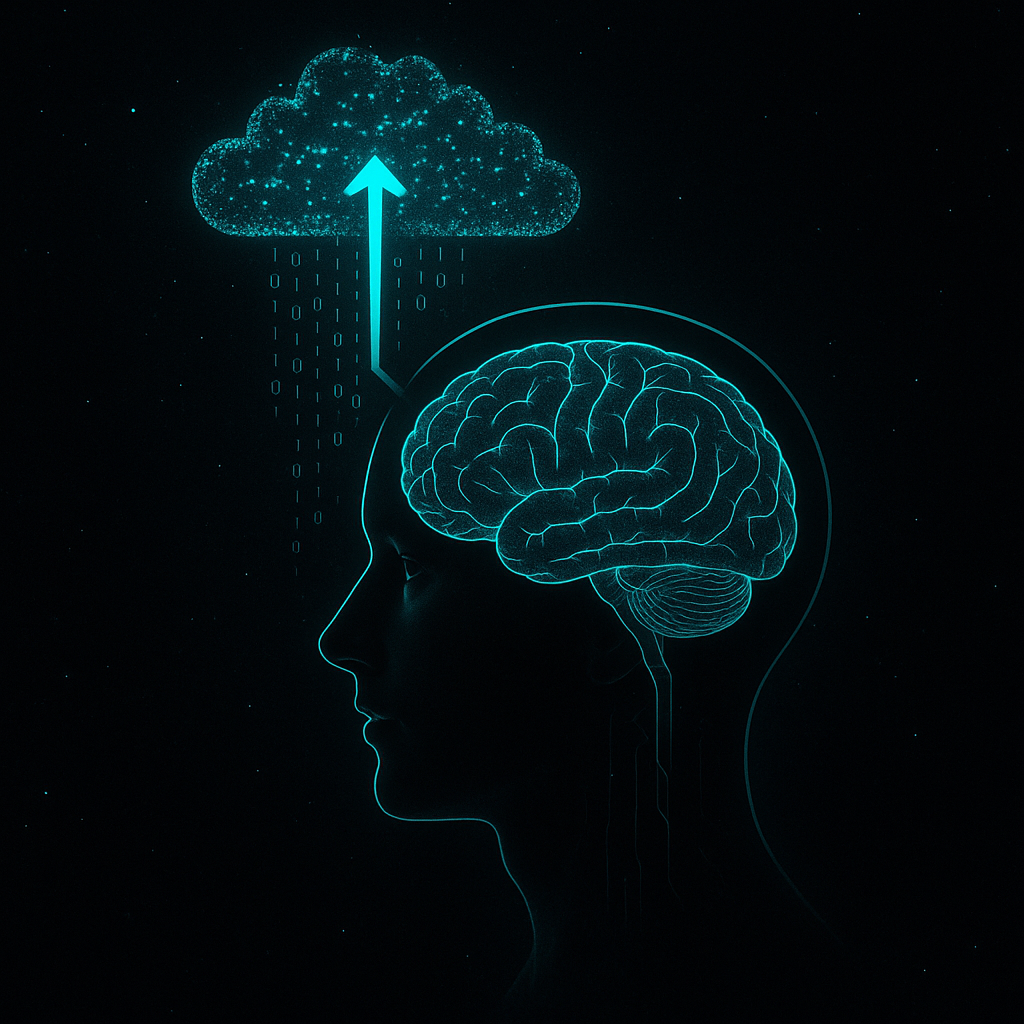
Mind uploading, also called whole brain emulation (WBE), is the hypothetical process of scanning a human brain in enough detail to recreate its entire pattern of thoughts, memories, and personality inside a computer. The resulting digital model would, in theory, think and respond just like the original person — including being conscious and self-aware.
The core idea sounds straightforward: if the brain is essentially an information-processing machine, then capturing that information completely should allow it to run on different hardware — much like moving software from one computer to another. Proponents argue this could one day allow a form of digital immortality, where a person's mind continues to exist even after their biological body dies.
However, the challenges are enormous and, for now, unsolved. The human brain contains roughly 86 billion neurons connected by an estimated 100 trillion synapses (the junctions between nerve cells). Mapping all of these connections — a project called connectomics — at the resolution needed to faithfully reproduce behavior has not been achieved even for simple animals at full scale. The most complete connectome mapped to date belongs to a tiny roundworm with just 302 neurons, and that took decades of work.
Beyond the engineering hurdles, there are deep philosophical questions that science has not resolved. Even if a perfect digital copy of a brain were made, would it truly be conscious? Would it be "you," or just a very convincing replica? These questions touch on the hard problem of consciousness — why and how physical processes give rise to subjective experience — which remains one of the biggest unsolved problems in science and philosophy.
It is important to be honest: mind uploading is currently a thought experiment, not an emerging technology. No credible near-term roadmap exists for achieving it. Coverage that frames it as imminent should be treated with significant skepticism.
Whole brain emulation (WBE) rests on a set of nested assumptions, each of which must hold for the concept to be technically viable. First, it assumes that mental states are substrate-independent — that consciousness and cognition are products of information processing patterns rather than the specific biological medium (neurons, glia, neurochemistry) in which they occur. This is a functionalist position in philosophy of mind, and while widely held among computationalists, it is not empirically settled.
Second, WBE requires a sufficiently detailed and accurate structural and functional map of the brain. Current connectomics efforts — most notably the MICrONS project and the full adult Drosophila (fruit fly) connectome published in 2023 — represent landmark achievements, but they operate at scales orders of magnitude below the human brain. The Drosophila connectome comprises roughly 140,000 neurons and 50 million synapses; the human brain exceeds this by factors of ~600,000 and ~2,000,000 respectively. Scanning methodologies such as serial-section electron microscopy are destructive, extremely slow, and produce data volumes in the petabyte range even for small tissue samples.
Third, the simulation itself poses a separate class of problems. Even granting a perfect structural map, the dynamic electrochemical behavior of neurons involves ion channel kinetics, neuromodulator gradients, glial interactions, and stochastic synaptic release — none of which are fully captured by current computational neuroscience models. The Blue Brain Project's decade-long effort to simulate a rat cortical column (~31,000 neurons) required supercomputing resources and still relied on significant biological approximations.
The question of fidelity thresholds is also unresolved: how much detail is "enough"? Theoretical work by researchers such as Anders Sandberg and Nick Bostrom (Future of Humanity Institute) has outlined tiered emulation levels — from coarse functional models to full molecular-level simulation — but no consensus exists on which level is necessary or sufficient for conscious experience to emerge in a substrate.
Methodologically, the field lacks a falsifiability framework. There is currently no agreed behavioral or physiological test that would confirm a digital emulation is genuinely conscious rather than a philosophical zombie (a system that behaves identically to a conscious being but has no inner experience). This is not merely a technical gap — it reflects the unresolved hard problem of consciousness articulated by philosopher David Chalmers.
Open questions that would need to be addressed before WBE becomes a credible near-term program include: (1) non-destructive, high-resolution, whole-brain imaging at nanometer scale; (2) real-time dynamic simulation of full human-scale neural networks; (3) validated computational models of consciousness; and (4) ethical and legal frameworks for the status of emulated minds. Claims that WBE is achievable within decades — sometimes made by transhumanist advocates — are not currently supported by the trajectory of neuroscience or computing hardware, and should be weighed accordingly.
Reality meter
Time horizon
Community read
Glossary
- substrate-independent
- The property of a system where its essential functions depend on the pattern of information processing rather than the specific physical material or medium in which it operates. In the context of consciousness, this means the mind could theoretically run on different biological or artificial substrates.
- connectomics
- The field of neuroscience that maps the complete network of neural connections (synapses) in a nervous system or brain region. It aims to create detailed wiring diagrams showing how neurons are connected to each other.
- philosophical zombie
- A hypothetical being that is physically and behaviorally identical to a conscious human but lacks any inner subjective experience or consciousness. It is used in philosophy to explore whether consciousness requires something beyond physical processes.
- hard problem of consciousness
- The philosophical question of why and how physical processes in the brain give rise to subjective conscious experience—why we have inner feelings and awareness rather than just processing information unconsciously.
- ion channel kinetics
- The study of how ion channels (protein structures that control the flow of charged particles across cell membranes) open, close, and change over time, which is fundamental to how neurons generate electrical signals.
- neuromodulator
- A chemical messenger in the brain that modulates or adjusts the activity of neurons over broader areas and longer timescales than traditional neurotransmitters, influencing mood, attention, and other brain functions.
Sources
No sources on file.
Prediction
Will a peer-reviewed proof-of-concept whole brain emulation of a mammalian brain be demonstrated by 2040?
Vote
Your vote feeds topic weights, community direction and future prioritisation. Open community direction