
Business Insider Names Eleven Rising Stars Shaping Longevity Science in 2026
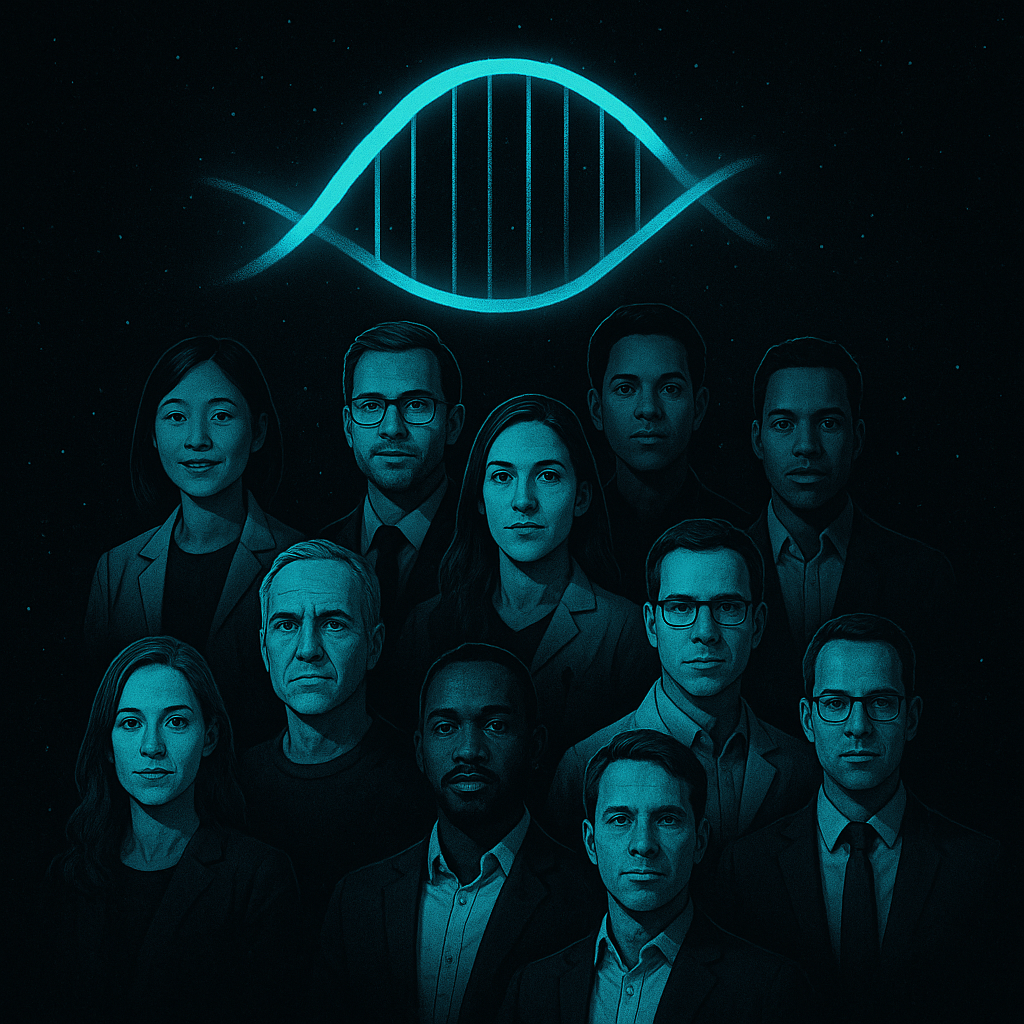
Longevity research is maturing from fringe science into a structured field with clinical, commercial, and policy dimensions. Business Insider's 2026 "Rising Stars of Longevity" list spotlights eleven practitioners whose evidence-based work is helping define what serious aging science looks like today.
Explanation
Aging research has long attracted both rigorous scientists and outright hucksters. What makes this Business Insider list notable is its stated emphasis on evidence-based work — meaning the people chosen are expected to back their claims with data, not just bold promises. The eleven honorees span a wide range of roles: laboratory biologists, clinicians, AI-driven drug developers, policy advocates, and investors.
One of the most cited figures is Daniel Belsky, who helped establish the concept that biological aging — how fast your body is actually deteriorating at the cellular level — can be measured and potentially slowed. This is distinct from chronological age (how many birthdays you've had). Tools that measure biological age, sometimes called "aging clocks," are now a central part of longevity research and clinical testing.
The list also reflects how longevity has become an industry, not just an academic pursuit. AI drug discovery companies are now scanning vast molecular databases to find compounds that might slow aging processes. Investors are funding clinical trials. Policy advocates are pushing regulators to formally recognize aging itself as a disease or condition worth treating — a classification shift that would unlock new funding and drug approval pathways.
It is worth being honest about where the field stands: most interventions that extend lifespan dramatically in mice have not translated to humans. The science is genuinely exciting, but many findings are still preliminary. The presence of investors and entrepreneurs on such a list is a reminder that commercial incentives and scientific caution do not always move at the same speed.
Overall, this list is a useful snapshot of who is considered credible and influential in longevity right now — incremental progress, but progress nonetheless.
The Business Insider "Rising Stars of Longevity 2026" list is a curated signal rather than a peer-reviewed output, but its selection criteria — evidence-based work and demonstrated innovation — give it more analytical weight than typical media rankings. The honorees collectively represent the current institutional architecture of longevity science: translational biology, geroscience-informed clinical medicine, computational drug discovery, regulatory strategy, and venture capital.
Daniel Belsky's contribution is paradigmatically important. His work on biological aging clocks — particularly the DunedinPACE methylation-based clock derived from the Dunedin cohort — operationalizes the rate of biological aging as a continuous, measurable phenotype. This is methodologically significant because it transforms "aging" from a binary or categorical variable into a quantitative endpoint suitable for clinical trial design. The FDA has not yet accepted biological age as a validated surrogate endpoint, which remains a key regulatory bottleneck for the field.
The inclusion of AI drug discovery practitioners reflects a broader trend: companies like Insilico Medicine, Recursion Pharmaceuticals, and others are using large-scale molecular modeling and generative chemistry to identify senolytics (drugs that clear senescent cells), mTOR pathway modulators, and NAD+ precursor analogs. The mechanistic rationale for these targets is solid — cellular senescence, mTORC1 hyperactivation, and mitochondrial dysfunction are well-documented hallmarks of aging — but human trial data at scale remains sparse. Most positive results still come from C. elegans, Drosophila, or mouse models, where translational fidelity to humans is historically poor.
The policy dimension is underappreciated but critical. The FDA's current framework requires drugs to target a specific disease, not aging per se. The "Targeting Aging with Metformin" (TAME) trial is the most prominent attempt to use a surrogate aging endpoint to gain regulatory traction. If TAME succeeds in demonstrating that metformin delays the onset of multiple age-related diseases simultaneously, it could open a regulatory pathway for true geroscience-based interventions. Advocates on the Business Insider list are working precisely on this interface between science and regulatory classification.
From a methodology standpoint, the list's reliance on a ChatGPT-generated summary of the original article (as noted in the source excerpt) introduces a layer of information loss. Specific claims about individual contributors should be verified against primary sources — the original Business Insider article and the researchers' own published work — before being treated as authoritative.
Open questions that would falsify or substantially revise the optimism embedded in this field include: whether any aging clock achieves FDA validation as a surrogate endpoint within this decade; whether any senolytic or mTOR-targeting drug demonstrates statistically significant healthspan extension in a randomized controlled human trial; and whether the commercial longevity sector can maintain scientific discipline as investor pressure for near-term returns intensifies. The field is real and advancing, but the gap between mechanistic understanding and proven human intervention remains wide.
Reality meter
Time horizon
Community read
Glossary
- biological aging clocks
- Molecular measurements that quantify the rate at which a person's body is aging at the cellular level, independent of chronological age. These clocks use biomarkers like DNA methylation patterns to produce a continuous, measurable score of biological age.
- senolytics
- A class of drugs designed to selectively eliminate senescent cells—cells that have stopped dividing but accumulate in tissues and contribute to aging and age-related diseases.
- surrogate endpoint
- A measurable outcome in a clinical trial that is believed to predict clinical benefit but is not itself a direct measure of how a patient feels or functions. The FDA must validate surrogate endpoints before they can be used to approve new drugs.
- geroscience
- The scientific study of the biological mechanisms of aging and how aging processes contribute to age-related diseases, with the goal of developing interventions to extend healthspan.
- senescent cells
- Cells that have permanently stopped dividing but remain metabolically active and secrete inflammatory molecules, accumulating in tissues with age and contributing to aging-related dysfunction.
- translational fidelity
- The degree to which results from laboratory or animal models accurately predict outcomes in human patients; poor translational fidelity means findings in mice or worms may not apply to humans.
Sources
No sources on file.
Prediction
Will at least one longevity-targeting drug receive FDA approval or formal regulatory recognition using a biological aging endpoint by 2030?
Vote
Your vote feeds topic weights, community direction and future prioritisation. Open community direction