Life Extension Research Targets Indefinite Human Lifespan Through Biomedical Advances
Scientists and advocates are pursuing technologies that could push human lifespan well beyond its apparent biological ceiling of roughly 125 years. The field draws on converging advances in genetics, regenerative medicine, and pharmaceuticals — but remains deeply contested on both scientific and ethical grounds.
Explanation
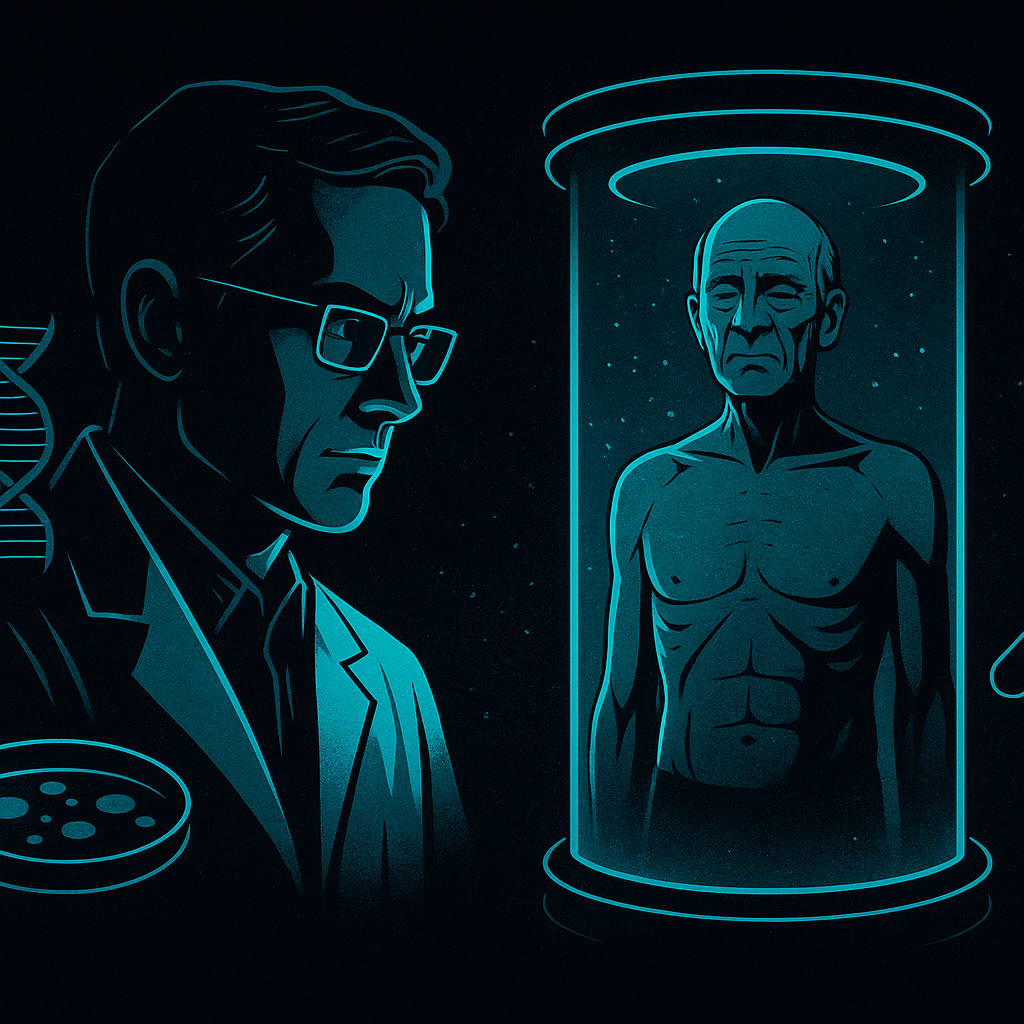
Life extension refers to deliberate efforts to lengthen how long humans live — either by making incremental improvements to existing medicine or by attempting something far more radical: breaking through the biological upper limit on human lifespan, which most researchers currently place at around 125 years. The field attracts a wide range of participants, from mainstream gerontologists (scientists who study aging) to more ambitious "immortalists" who believe death from aging could eventually be eliminated entirely.
The core idea is that aging is not simply an inevitable fact of nature, but a biological process that can, in principle, be understood and interfered with. Researchers point to several promising avenues: stem cell therapies (using the body's own repair cells to replace damaged tissue), gene therapy (editing DNA to correct age-related errors), regenerative medicine (regrowing or repairing organs), and even organ replacement using artificial devices or animal-derived organs (xenotransplantation).
The most ambitious goal in the field is sometimes called "agerasia" — a state of complete rejuvenation in which a person's body is continuously restored to a condition of optimal health and youth, effectively halting biological aging. This remains firmly in the realm of hypothesis for now, with no demonstrated path to achieving it in humans.
It is important to be honest about where the science currently stands: while there have been genuine advances in understanding the biology of aging — including the identification of cellular processes like senescence (when cells stop dividing but don't die) and telomere shortening — no intervention has yet been shown to meaningfully extend the maximum human lifespan. Most current longevity treatments extend average life expectancy, not the upper ceiling.
The ethical dimensions are significant and unresolved. Bioethicists raise questions about social inequality (would life extension be available only to the wealthy?), overpopulation, resource allocation, and what radically longer lives might mean for human identity and society. These debates are ongoing and should be considered alongside the science.
Life extension research sits at the intersection of gerontology, molecular biology, and translational medicine. The field broadly divides into two camps: those pursuing incremental compression of morbidity (extending healthspan within the existing ~125-year ceiling) and those pursuing indefinite lifespan extension by targeting the root mechanisms of biological aging itself.
The theoretical upper bound of ~125 years is derived from demographic and actuarial data, most notably the analysis by Dong, Milholland, and Vijg (2016, Nature), which argued that maximum reported age at death has plateaued since the 1990s. This claim remains contested — subsequent studies, including work by Rootzen and Zholud, dispute the statistical methodology and suggest no firm ceiling has been demonstrated. The debate is unresolved and methodologically important: whether a hard biological limit exists has direct implications for how the field frames its goals.
On the mechanistic side, several hallmarks of aging have been identified (López-Otín et al., 2013, Cell) — including genomic instability, telomere attrition, epigenetic alterations, loss of proteostasis, mitochondrial dysfunction, cellular senescence, and stem cell exhaustion. Each represents a potential intervention target. Senolytics (drugs that selectively clear senescent cells) have shown lifespan extension in mouse models, with compounds like dasatinib and quercetin entering early human trials. Rapamycin, an mTOR inhibitor, has demonstrated consistent lifespan extension across multiple model organisms, though human translation remains cautious due to immunosuppressive side effects.
Gene therapy approaches include work on telomerase activation (notably by the Belmonte lab at the Salk Institute), partial epigenetic reprogramming using Yamanaka factors, and CRISPR-based correction of age-associated mutations. Partial reprogramming has reversed aging markers in mouse tissue without inducing teratoma formation — a key safety concern — but the jump to human application involves substantial regulatory and biological hurdles. Xenotransplantation has seen recent milestones, including the 2022 University of Maryland genetically modified pig heart transplant into a human patient, though long-term viability remains unproven.
The claim that these technologies will "eventually enable indefinite lifespans" is speculative and should be flagged as such. The source article reflects the aspirational framing common in longevity advocacy literature. What the science currently supports is a growing mechanistic understanding of aging and early-stage interventions that extend healthspan in model organisms. Extrapolation to indefinite human lifespan requires assumptions about technological convergence that are not yet empirically grounded.
Key open questions include: whether aging has a single tractable root cause or is irreducibly multifactorial; whether interventions effective in short-lived model organisms (mice, C. elegans) will translate to humans with fundamentally different aging kinetics; and how regulatory frameworks will handle therapies aimed at aging itself, which is not classified as a disease by most health authorities (though the WHO's ICD-11 introduced an "ageing-related" category, a potentially significant shift). Falsification criteria for the strongest claims in the field would include: failure of senolytics to extend human healthspan in ongoing Phase II/III trials, and absence of any demonstrated maximum lifespan extension in primates within the next two decades.
Reality meter
Time horizon
Community read
Glossary
- Healthspan
- The period of life spent in good health and free from chronic disease, as opposed to total lifespan. Life extension research often focuses on extending healthspan rather than merely extending years lived with illness.
- Senescent cells
- Cells that have stopped dividing and accumulate in tissues with age, contributing to aging and age-related diseases. These dysfunctional cells can be targeted by senolytics, a class of drugs designed to clear them.
- Senolytics
- Drugs that selectively identify and eliminate senescent cells from the body. Examples include dasatinib and quercetin, which have shown promise in extending lifespan in animal models.
- mTOR inhibitor
- A class of drug that blocks the mTOR protein, a key regulator of cell growth and metabolism. Rapamycin is an mTOR inhibitor that has demonstrated lifespan extension across multiple organisms.
- Epigenetic reprogramming
- A process that reverses age-related changes in gene expression without altering the underlying DNA sequence. Yamanaka factors are used in partial epigenetic reprogramming to reset cellular aging markers.
- Telomere attrition
- The gradual shortening of telomeres (protective caps on chromosome ends) that occurs with each cell division and is associated with cellular aging. This is one of the identified hallmarks of aging.
Sources
No sources on file.
Prediction
Will any peer-reviewed human clinical trial demonstrate a statistically significant extension of maximum lifespan (beyond 125 years) by 2050?
Vote
Your vote feeds topic weights, community direction and future prioritisation. Open community direction