
Cedars-Sinai Stem Cell Immune Therapy Reverses Brain Aging in Mice
Cedars-Sinai researchers didn't just slow cognitive decline in mice — they reversed it, using lab-grown "young" immune cells derived from human stem cells. The brain didn't need to be touched directly; the blood did the work.
Explanation
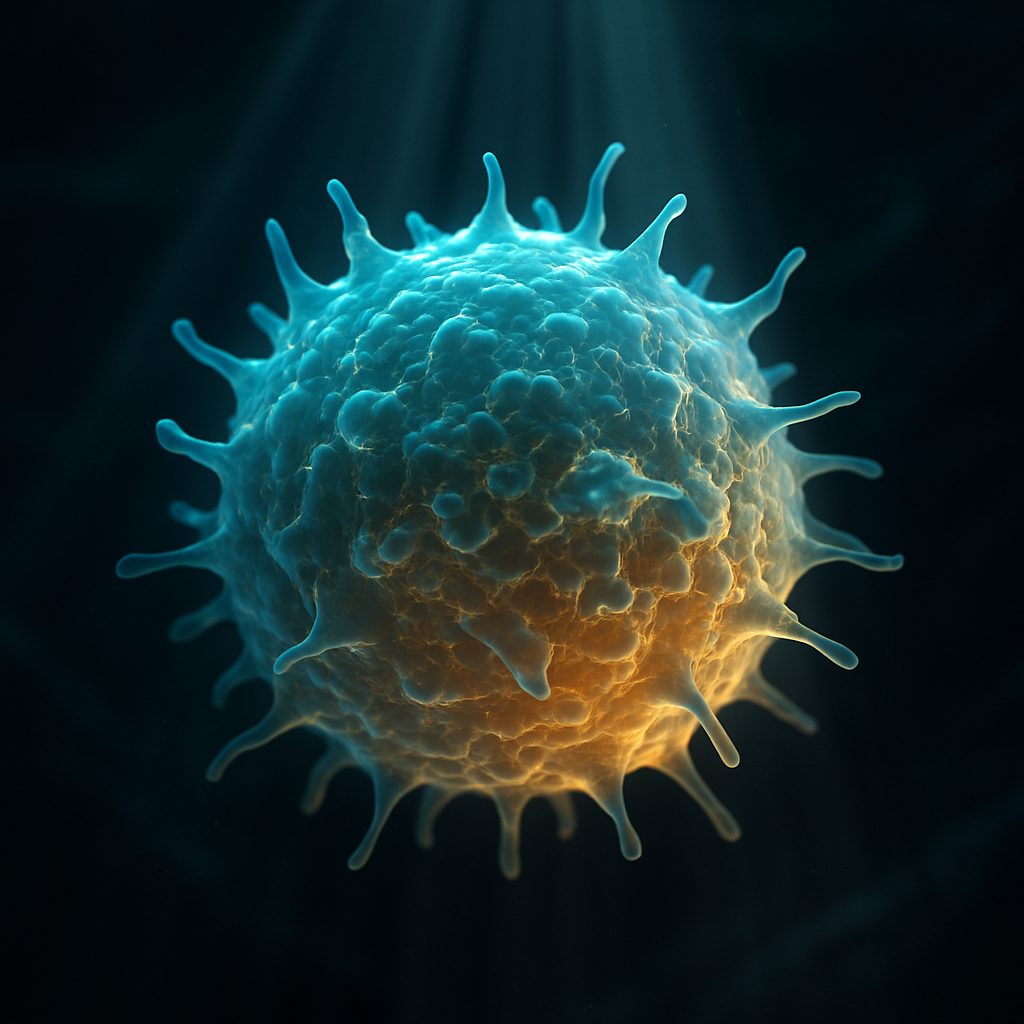
The study out of Cedars-Sinai took human stem cells — the blank-slate cells that can become almost any cell type in the body — and coaxed them into becoming young, functional immune cells. When these cells were introduced into aging mice showing Alzheimer's-like symptoms, something unexpected happened: memory improved, and brain structures associated with cognition looked measurably healthier.
The key twist is *how* it worked. The immune cells didn't appear to directly attack plaques or repair neurons. Instead, they seem to have released anti-aging signals into the bloodstream that the brain then responded to — a kind of biological rejuvenation broadcast rather than a surgical fix.
Why does this matter now? Most Alzheimer's research targets the brain directly — clearing amyloid plaques, blocking tau tangles. This approach sidesteps that entirely, treating the immune system as the lever. That opens a different design space for therapies, and potentially a more scalable one: stem-cell-derived immune cells could, in theory, be manufactured and personalized to a patient's own biology.
The "personalized" angle is real but early. Autologous therapies (made from a patient's own cells) are expensive and complex to produce at scale. The mouse results are promising, but mice have a poor track record as Alzheimer's models — many interventions that work in rodents have failed in humans.
Still, the mechanism — peripheral immune signaling reshaping brain aging — is worth watching. If it holds in primates or early human trials, it reframes neurodegeneration as partly an immune system failure, not just a brain disease.
The Cedars-Sinai team differentiated human induced pluripotent stem cells (iPSCs) into hematopoietic progenitor-derived immune cells — effectively resetting immunological age in vitro before systemic delivery. In aged, Alzheimer's-model mice, recipients showed improved performance on spatial memory tasks and histological markers consistent with reduced neuroinflammation and preserved hippocampal architecture.
The proposed mechanism is paracrine rather than cytotoxic: the young immune cells appear to remodel the circulating cytokine and extracellular vesicle milieu, producing downstream neuroprotective effects without direct CNS engraftment. This is conceptually adjacent to parabiosis studies (Villeda et al., Wyss-Coray lab) that demonstrated cognitive rejuvenation via young blood factors — but here the source is engineered, not a conjoined young organism, which is a meaningful translational step.
What's novel is the iPSC origin. Prior heterochronic approaches relied on donor-derived young cells or plasma fractions, both logistically and ethically constrained. An iPSC-derived, potentially autologous immune cell product sidesteps donor dependency and opens a path to HLA-matched or patient-specific manufacturing — though cost-per-dose and GMP scalability remain unsolved.
Critical open questions: Which immune cell subtypes are doing the heavy lifting — microglia precursors, T-regulatory cells, monocyte-derived macrophages? What is the active secretome? And crucially, how durable are the effects — single infusion or maintenance dosing? The paper does not appear to resolve these.
The Alzheimer's mouse model caveat is non-trivial. Transgenic amyloid/tau models have generated dozens of "reversals" that evaporated in Phase II. The indirect, systemic mechanism here is actually somewhat more encouraging than plaque-targeting approaches — it's less model-specific — but that's a low bar.
Watch for: non-human primate data, identification of the active signaling factors (which could become standalone drug candidates), and whether any biotech has already licensed the IP. If the secretome is characterizable, this could spawn a cell-free therapeutic faster than the cell therapy itself.
Reality meter
Time horizon
Community read
Glossary
- induced pluripotent stem cells (iPSCs)
- Adult cells that have been genetically reprogrammed to an embryonic stem cell-like state, capable of differentiating into any cell type in the body. They offer a way to generate patient-specific cells without using embryos.
- hematopoietic progenitor cells
- Immature blood-forming cells that can develop into various types of blood and immune cells. These cells serve as precursors for red blood cells, white blood cells, and platelets.
- paracrine
- A type of cell signaling where cells release molecules (like cytokines or extracellular vesicles) that affect nearby cells without direct physical contact. In this context, it means the immune cells work by secreting beneficial factors rather than directly attacking diseased cells.
- extracellular vesicles
- Small membrane-bound particles released by cells that carry proteins, lipids, and nucleic acids to communicate with other cells. They function as intercellular messengers in the body.
- neuroinflammation
- Inflammation occurring in the brain and nervous system, typically involving immune cell activation and release of inflammatory molecules that can damage or protect neural tissue depending on context.
- heterochronic
- Involving the combination or transplantation of biological material from organisms of different ages. In this context, it refers to therapeutic approaches using young cells or factors to treat age-related conditions.
- secretome
- The complete set of proteins and signaling molecules that a cell or tissue type secretes or releases into its surrounding environment. Identifying the secretome helps determine which factors are responsible for therapeutic effects.
Sources
- Tier 3 Scientists reversed brain aging and memory loss in mice
- Tier 3 Longevity Science Is Overhyped. But This Research Really Could Change Humanity.
- Tier 3 11 Rising Stars Shaping the Future of Longevity - Business Insider
- Tier 3 A cheap drug used by longevity enthusiasts may have a surprising impact on exercise
- Tier 3 Scientists boost lifespan by 70% in elderly male mice using simple drug combo | ScienceDaily
- Tier 3 Next gen cancer drug shows surprising anti aging power | ScienceDaily
- Tier 3 The Future of Longevity: Innovations in Aging Research - IMJ Health Blog
- Tier 3 A long and ongoing look at the secrets of human longevity and healthy aging | ScienceDaily
- Tier 3 Healthy Aging News -- ScienceDaily
- Tier 3 Amid the Hype, Longevity Science Shows Some Progress – HotAir
- Tier 3 It’s never too late: Just moving more could add years to your life | ScienceDaily
- Tier 3 This method to reverse cellular aging is about to be tested in humans | Scientific American
- Tier 1 This method to reverse cellular ageing is about to be tested in humans
- Tier 3 Timeline of aging research - Wikipedia
- Tier 3 A hidden cellular cleanup trick could reverse aging | ScienceDaily
- Tier 3 Scientists may have found how to reverse memory loss in aging brains | ScienceDaily
- Tier 3 New nasal spray reverses brain aging while restoring memory, giving new hope to people with dementia
- Tier 1 Daily briefing: A treatment to reverse cellular ageing is about to be tested in people
- Tier 3 Brain Research breakthrough: Nasal Spray Reverses Aging Effects
- Tier 3 Life Extension Treatments: A New Era in Anti-Aging (2026)
- Tier 3 Clinical trial for Longevity drug meets goal of enrolling 1000 dogs | dvm360
- Tier 3 Home lifespan | Lifespan Research Institute
- Tier 3 FDA determines drug for lifespan extension in large dogs to have a Reasonable Expectation of Effectiveness | dvm360
- Tier 3 Second drug for canine healthy lifespan extension receives FDA support | dvm360
- Tier 3 Seragon Publishes Record-Breaking SRN-901 Longevity Data, Demonstrating 33% Lifespan Extension in Mice
- Tier 3 Scientists bet on longevity to unlock a longer lifespan for humans | MEXC News
- Tier 3 Can aging be slowed? Some academic scientists think so | AAMC
- Tier 3 Reconsidering GLYNAC: What the Evidence Actually Says About Glycine, NAC, Reversing Aging, and Life Extension - New Life Longevity
- Tier 3 dsm-firmenich unveils science-backed longevity innovations at Vitafoods Europe 2026
- Tier 3 Serum protein profiling reveals hallmark-level aging trajectories and strain-specific resilience in CB6F1J and C57BL/6J male mice | bioRxiv
- Tier 1 Cardiovascular ageing: hallmarks, signaling pathways, diseases and therapeutic targets | Signal Transduction and Targeted Therapy
- Tier 3 Organelle resilience as a comparative blueprint for longevity | EMBO Molecular Medicine | Springer Nature Link
- Tier 3 The Hallmarks of Aging and Senescence
- Tier 3 The 14 Hallmarks of Aging: How NAD+ Plays a Role in Every Hallmark
- Tier 3 Peer-Reviewed Aging Research Journal | Aging-US
- Tier 3 The Hallmarks of Aging
- Tier 3 Blue zone - Wikipedia
- Tier 3 Home - Live Better, Longer - Blue Zones
- Tier 3 Origins of the Blue Zones and Longevity Secrets - Blue Zones Project
- Tier 3 Blue Zones longevity claims may rest on flawed records, essay argues
- Tier 3 Are Blue Zones Debunked? - by Sarah Ballantyne, PhD
- Tier 3 How people in Blue Zones live longer, and the 5 habits ...
- Tier 3 Lessons from Blue Zones: Diet & Lifestyle for Longevity
- Tier 3 Are Blue Zones Real? A New Scientific Definition for Longevity Hotspots Could Be a Game Changer.
- Tier 3 Scientists set a formal definition for "Blue Zones" | EurekAlert!
- Tier 3 Blue zones: New rules define where people truly live the longest - Earth.com
Prediction
Will stem-cell-derived immune cell therapy enter human clinical trials for Alzheimer's or brain aging within the next 3 years?
Vote
Your vote feeds topic weights, community direction and future prioritisation. Open community direction