
Nasal Spray Reduces Brain Inflammation and Restores Memory in Aging Study
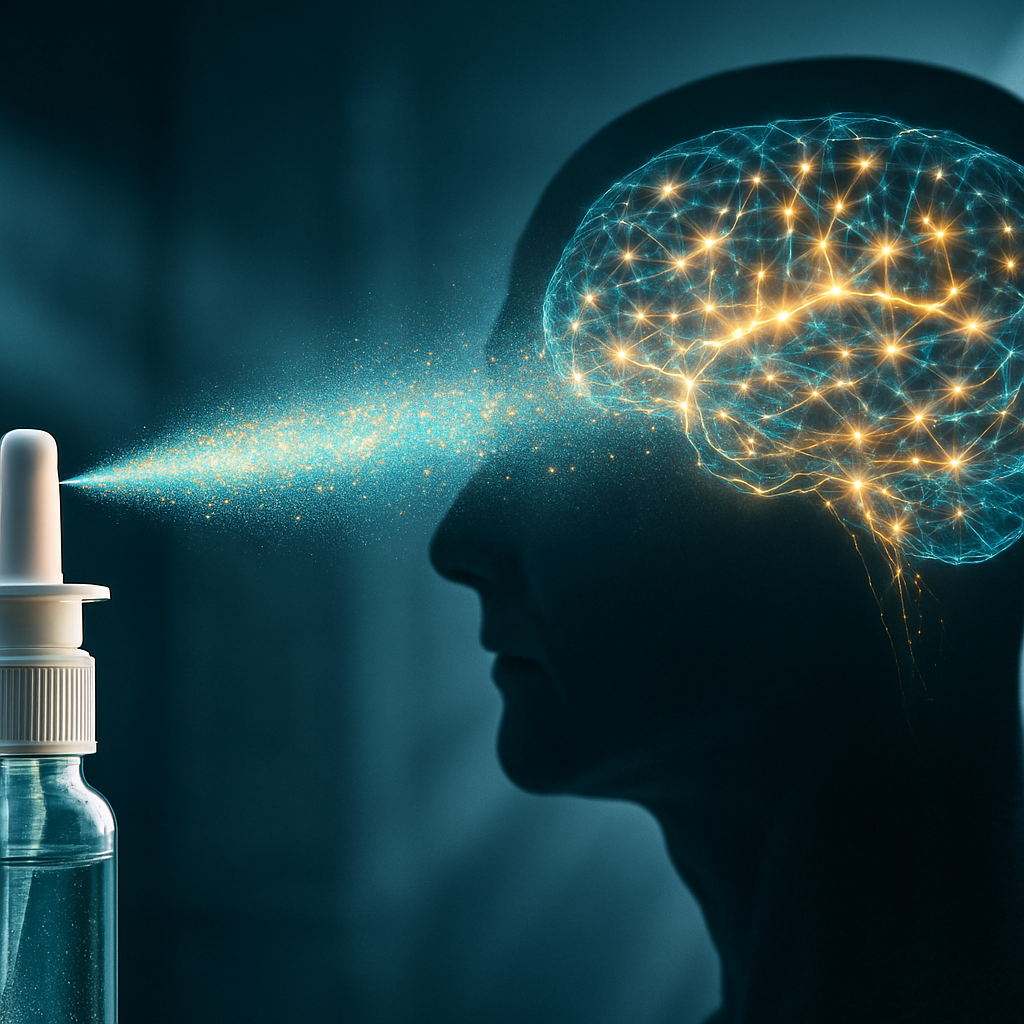
A nasal spray delivering an anti-inflammatory compound directly to the brain reversed memory deficits in aging models — no surgery, no systemic side effects, no blood-brain barrier problem to solve.
Explanation
The blood-brain barrier (BBB) is the wall that keeps most drugs out of the brain — and it's the reason treating dementia is so hard. This new research sidesteps it entirely by using a nasal spray to deliver a compound that dials down neuroinflammation (chronic low-grade brain inflammation, a key driver of age-related cognitive decline).
The results showed improved memory performance and measurable reductions in inflammatory markers in the brain. The framing around "reversing brain aging" is the study's own — treat that claim with appropriate skepticism until human trial data lands — but the underlying mechanism is real and has been building in the literature for years.
Why it matters now: neuroinflammation has quietly become one of the most credible targets in dementia research, overtaking the amyloid-only hypothesis that burned billions in failed drug trials. A non-invasive delivery route that actually reaches the target tissue changes the economics and accessibility of treatment dramatically. No infusion clinic, no implant, no prescription obstacle course.
The practical gap between "works in a lab model" and "works in a human with Alzheimer's" is still enormous. But the delivery mechanism alone — intranasal CNS targeting — is worth watching independently of this specific compound. If the approach scales, it becomes a platform, not just a drug.
Watch for: peer replication, phase I human safety data, and whether the memory gains persist or fade after treatment stops.
The study targets neuroinflammation via intranasal drug delivery — a route that exploits olfactory and trigeminal nerve pathways to bypass the blood-brain barrier and achieve CNS bioavailability without systemic exposure. This isn't a novel concept (intranasal insulin for cognition has been in trials for over a decade), but efficacy data at the level of memory restoration and inflammatory marker reduction in aging models is a meaningful step up from prior work.
The mechanistic claim rests on reducing microglial overactivation — the process by which the brain's resident immune cells shift from protective to destructive in chronic inflammation, accelerating synaptic pruning and neuronal loss. If the compound genuinely suppresses this without blunting acute immune response, that's a meaningful selectivity win. The source doesn't specify the compound class, which matters: small molecule, peptide, or biologic each carry very different stability, dosing, and regulatory profiles for intranasal delivery.
The "reverses brain aging" headline is doing heavy lifting. What the data likely shows is functional recovery in an inflammation-driven decline model — not reversal of underlying cellular senescence or epigenetic aging clocks. Those are different claims with different evidence bars. Conflating them is a common overclaim in this space.
Prior art context: intranasal delivery of neuroprotective agents (NAP peptide, deferoxamine, GLP-1 agonists) has shown promise in rodent models with inconsistent human translation. The failure mode is usually pharmacokinetics — sufficient CNS concentration is hard to maintain without irritating the nasal mucosa or triggering clearance mechanisms.
Open questions that determine whether this is a platform or a footnote: What's the dosing frequency required to sustain effect? Do inflammatory markers rebound on cessation? Is the memory improvement task-specific or broad? And critically — does it work in the presence of existing amyloid or tau pathology, or only in inflammation-primary models?
Falsifier to watch: if phase I human data shows poor CNS penetration or requires doses that cause mucosal toxicity, the delivery route advantage collapses regardless of the compound's efficacy profile.
Reality meter
Time horizon
Community read
Glossary
- neuroinflammation
- Chronic inflammation in the brain and central nervous system, characterized by activation of immune cells that can damage neurons and impair cognitive function.
- blood-brain barrier
- A selective membrane that separates the brain from the bloodstream, blocking most large molecules and drugs from entering the brain tissue.
- microglial overactivation
- A state in which microglia (the brain's resident immune cells) become excessively active and shift from a protective role to a destructive one, damaging synapses and neurons.
- synaptic pruning
- The process by which the brain removes or weakens connections between neurons, which can be beneficial during development but harmful when excessive in aging or disease.
- CNS bioavailability
- The degree to which a drug reaches and becomes available in the central nervous system (brain and spinal cord) after administration.
- cellular senescence
- A state in which cells permanently stop dividing and accumulate damage, contributing to aging and age-related diseases.
Sources
- Tier 3 New nasal spray reverses brain aging while restoring memory, giving new hope to people with dementia
- Tier 3 Longevity Science Is Overhyped. But This Research Really Could Change Humanity.
- Tier 3 11 Rising Stars Shaping the Future of Longevity - Business Insider
- Tier 3 A cheap drug used by longevity enthusiasts may have a surprising impact on exercise
- Tier 3 Scientists boost lifespan by 70% in elderly male mice using simple drug combo | ScienceDaily
- Tier 3 Next gen cancer drug shows surprising anti aging power | ScienceDaily
- Tier 3 The Future of Longevity: Innovations in Aging Research - IMJ Health Blog
- Tier 3 A long and ongoing look at the secrets of human longevity and healthy aging | ScienceDaily
- Tier 3 Healthy Aging News -- ScienceDaily
- Tier 3 Amid the Hype, Longevity Science Shows Some Progress – HotAir
- Tier 3 It’s never too late: Just moving more could add years to your life | ScienceDaily
- Tier 3 This method to reverse cellular aging is about to be tested in humans | Scientific American
- Tier 1 This method to reverse cellular ageing is about to be tested in humans
- Tier 3 Timeline of aging research - Wikipedia
- Tier 3 A hidden cellular cleanup trick could reverse aging | ScienceDaily
- Tier 3 Scientists may have found how to reverse memory loss in aging brains | ScienceDaily
- Tier 3 Scientists reversed brain aging and memory loss in mice | ScienceDaily
- Tier 1 Daily briefing: A treatment to reverse cellular ageing is about to be tested in people
- Tier 3 Brain Research breakthrough: Nasal Spray Reverses Aging Effects
- Tier 3 Life Extension Treatments: A New Era in Anti-Aging (2026)
- Tier 3 Clinical trial for Longevity drug meets goal of enrolling 1000 dogs | dvm360
- Tier 3 Home lifespan | Lifespan Research Institute
- Tier 3 FDA determines drug for lifespan extension in large dogs to have a Reasonable Expectation of Effectiveness | dvm360
- Tier 3 Second drug for canine healthy lifespan extension receives FDA support | dvm360
- Tier 3 Seragon Publishes Record-Breaking SRN-901 Longevity Data, Demonstrating 33% Lifespan Extension in Mice
- Tier 3 Scientists bet on longevity to unlock a longer lifespan for humans | MEXC News
- Tier 3 Can aging be slowed? Some academic scientists think so | AAMC
- Tier 3 Reconsidering GLYNAC: What the Evidence Actually Says About Glycine, NAC, Reversing Aging, and Life Extension - New Life Longevity
- Tier 3 dsm-firmenich unveils science-backed longevity innovations at Vitafoods Europe 2026
- Tier 3 Serum protein profiling reveals hallmark-level aging trajectories and strain-specific resilience in CB6F1J and C57BL/6J male mice | bioRxiv
- Tier 1 Cardiovascular ageing: hallmarks, signaling pathways, diseases and therapeutic targets | Signal Transduction and Targeted Therapy
- Tier 3 Organelle resilience as a comparative blueprint for longevity | EMBO Molecular Medicine | Springer Nature Link
- Tier 3 The Hallmarks of Aging and Senescence
- Tier 3 The 14 Hallmarks of Aging: How NAD+ Plays a Role in Every Hallmark
- Tier 3 Peer-Reviewed Aging Research Journal | Aging-US
- Tier 3 The Hallmarks of Aging
- Tier 3 Blue zone - Wikipedia
- Tier 3 Home - Live Better, Longer - Blue Zones
- Tier 3 Origins of the Blue Zones and Longevity Secrets - Blue Zones Project
- Tier 3 Blue Zones longevity claims may rest on flawed records, essay argues
- Tier 3 Are Blue Zones Debunked? - by Sarah Ballantyne, PhD
- Tier 3 How people in Blue Zones live longer, and the 5 habits ...
- Tier 3 Lessons from Blue Zones: Diet & Lifestyle for Longevity
- Tier 3 Are Blue Zones Real? A New Scientific Definition for Longevity Hotspots Could Be a Game Changer.
- Tier 3 Scientists set a formal definition for "Blue Zones" | EurekAlert!
- Tier 3 Blue zones: New rules define where people truly live the longest - Earth.com
Prediction
Will this nasal spray approach enter human clinical trials and demonstrate measurable cognitive improvement within the next three years?
Vote
Your vote feeds topic weights, community direction and future prioritisation. Open community direction