
Cellular Senescence Sits at the Center of Nearly Every Aging Pathway
Aging isn't random cellular wear-and-tear — it's a set of organized, interconnected biological programs. And one mechanism, cellular senescence, plugs into almost all of them at once.
Explanation
The "hallmarks of aging" framework is the field's best attempt to map why bodies break down. Instead of a vague story about damage accumulating over time, researchers have identified specific, recurring processes — genomic instability (errors building up in DNA), mitochondrial dysfunction (energy factories failing), and chronic low-grade inflammation, among others. These aren't isolated problems; they feed each other.
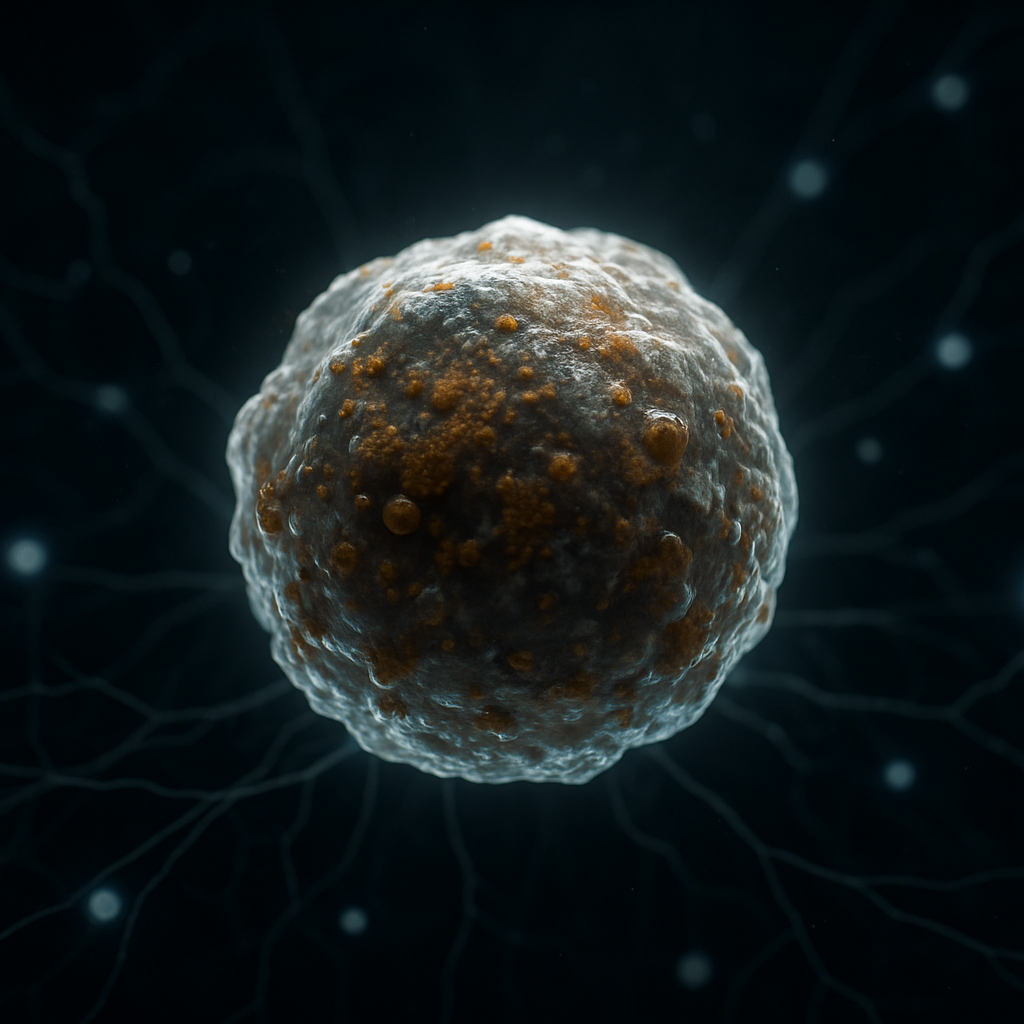
Cellular senescence is the mechanism sitting at the crossroads. A senescent cell is one that has stopped dividing but refuses to die. It lingers, and it's not quiet about it: it secretes a cocktail of inflammatory signals known as the SASP (senescence-associated secretory phenotype), which damages neighboring cells, fuels systemic inflammation, and accelerates the very hallmarks it connects to.
Why does this matter today? Because it reframes the intervention target. If senescence is upstream of — or at least deeply entangled with — genomic instability, mitochondrial decline, and inflammaging (chronic age-related inflammation), then clearing or suppressing senescent cells could theoretically slow multiple aging processes in one move. That's the logic behind senolytics, drugs designed to selectively eliminate senescent cells.
The framework is conceptual, not a cure. But it gives longevity researchers a map instead of a maze. The practical upshot: clinical trials for senolytic compounds are already running, and the hallmarks model is what's guiding target selection. What to watch — whether clearing senescent cells in humans produces measurable, durable effects across multiple aging markers, or whether the biology is messier in practice than the framework suggests.
The hallmarks of aging framework — formalized by López-Otín et al. and now in its third iteration — organizes aging biology into primary, antagonistic, and integrative hallmarks. Cellular senescence occupies a structurally privileged position: it is both a downstream consequence of primary hallmarks (genomic instability, telomere attrition, epigenetic drift) and an upstream driver of integrative ones (stem cell exhaustion, altered intercellular communication, chronic inflammation).
The mechanism is well-characterized. Senescent cells exit the cell cycle via p16/INK4a or p21/CIP1 pathway activation, typically triggered by DNA damage response (DDR) signaling. What makes them systemically dangerous is the SASP — a heterogeneous secretome including IL-6, IL-8, MMPs, and TGF-β isoforms. SASP propagates paracrine senescence, degrades extracellular matrix, suppresses immune clearance, and sustains the NF-κB inflammatory loop that links senescence directly to inflammaging and mitochondrial ROS accumulation.
The conceptual leverage here is the non-linearity of the network. Senescence doesn't just correlate with other hallmarks — it amplifies them through feedback. Mitochondrial dysfunction elevates ROS, which drives DDR, which triggers senescence, which via SASP further impairs mitochondrial function in neighboring cells. Targeting senescence is therefore a potential network interrupt, not just a single-pathway fix.
Senolytics (navitoclax, dasatinib + quercetin) and senomorphics (compounds that suppress SASP without killing senescent cells) are the two main intervention classes in trials. Early human data show reductions in senescence biomarkers and some functional improvements, but effect sizes and durability remain open questions. The harder problem: senescent cells aren't uniformly harmful — they play roles in wound healing and tumor suppression, so indiscriminate clearance carries trade-offs.
The falsifier to watch: if senolytic trials in humans fail to produce multi-hallmark improvements despite confirmed senescent cell clearance, it would suggest the framework's interconnectedness is overstated, or that compensatory mechanisms dominate at the systemic level. That result would force a significant revision of the "one target, many effects" thesis driving much of current longevity drug development.
Reality meter
Time horizon
Community read
Glossary
- Cellular senescence
- A state in which cells permanently stop dividing but remain metabolically active, typically triggered by DNA damage or other stress signals. Senescent cells accumulate with age and contribute to aging-related diseases.
- SASP (Senescence-Associated Secretory Phenotype)
- A collection of inflammatory molecules and enzymes secreted by senescent cells, including cytokines like IL-6 and IL-8, matrix-degrading enzymes (MMPs), and growth factors. SASP spreads cellular damage to neighboring cells and drives chronic inflammation.
- DNA damage response (DDR)
- The cellular signaling pathway that detects and responds to breaks or damage in DNA, triggering repair mechanisms or, if damage is severe, cell cycle arrest or senescence.
- Senolytics
- Drugs designed to selectively kill senescent cells, removing them from tissues. Examples include navitoclax and the combination of dasatinib and quercetin.
- Senomorphics
- Compounds that suppress the harmful secretory phenotype (SASP) of senescent cells without killing the cells themselves, reducing inflammation while preserving any beneficial functions of senescence.
- Inflammaging
- Chronic, low-grade systemic inflammation that develops with age, driven by accumulation of senescent cells and other age-related changes that activate inflammatory pathways like NF-κB.
Sources
- Tier 3 The Hallmarks of Aging and Senescence
- Tier 3 Longevity Science Is Overhyped. But This Research Really Could Change Humanity.
- Tier 3 11 Rising Stars Shaping the Future of Longevity - Business Insider
- Tier 3 A cheap drug used by longevity enthusiasts may have a surprising impact on exercise
- Tier 3 Scientists boost lifespan by 70% in elderly male mice using simple drug combo | ScienceDaily
- Tier 3 Next gen cancer drug shows surprising anti aging power | ScienceDaily
- Tier 3 The Future of Longevity: Innovations in Aging Research - IMJ Health Blog
- Tier 3 A long and ongoing look at the secrets of human longevity and healthy aging | ScienceDaily
- Tier 3 Healthy Aging News -- ScienceDaily
- Tier 3 Amid the Hype, Longevity Science Shows Some Progress – HotAir
- Tier 3 It’s never too late: Just moving more could add years to your life | ScienceDaily
- Tier 3 This method to reverse cellular aging is about to be tested in humans | Scientific American
- Tier 1 This method to reverse cellular ageing is about to be tested in humans
- Tier 3 Timeline of aging research - Wikipedia
- Tier 3 A hidden cellular cleanup trick could reverse aging | ScienceDaily
- Tier 3 Scientists may have found how to reverse memory loss in aging brains | ScienceDaily
- Tier 3 Scientists reversed brain aging and memory loss in mice | ScienceDaily
- Tier 3 New nasal spray reverses brain aging while restoring memory, giving new hope to people with dementia
- Tier 1 Daily briefing: A treatment to reverse cellular ageing is about to be tested in people
- Tier 3 Brain Research breakthrough: Nasal Spray Reverses Aging Effects
- Tier 3 Life Extension Treatments: A New Era in Anti-Aging (2026)
- Tier 3 Clinical trial for Longevity drug meets goal of enrolling 1000 dogs | dvm360
- Tier 3 Home lifespan | Lifespan Research Institute
- Tier 3 FDA determines drug for lifespan extension in large dogs to have a Reasonable Expectation of Effectiveness | dvm360
- Tier 3 Second drug for canine healthy lifespan extension receives FDA support | dvm360
- Tier 3 Seragon Publishes Record-Breaking SRN-901 Longevity Data, Demonstrating 33% Lifespan Extension in Mice
- Tier 3 Scientists bet on longevity to unlock a longer lifespan for humans | MEXC News
- Tier 3 Can aging be slowed? Some academic scientists think so | AAMC
- Tier 3 Reconsidering GLYNAC: What the Evidence Actually Says About Glycine, NAC, Reversing Aging, and Life Extension - New Life Longevity
- Tier 3 dsm-firmenich unveils science-backed longevity innovations at Vitafoods Europe 2026
- Tier 3 Serum protein profiling reveals hallmark-level aging trajectories and strain-specific resilience in CB6F1J and C57BL/6J male mice | bioRxiv
- Tier 1 Cardiovascular ageing: hallmarks, signaling pathways, diseases and therapeutic targets | Signal Transduction and Targeted Therapy
- Tier 3 Organelle resilience as a comparative blueprint for longevity | EMBO Molecular Medicine | Springer Nature Link
- Tier 3 The 14 Hallmarks of Aging: How NAD+ Plays a Role in Every Hallmark
- Tier 3 Peer-Reviewed Aging Research Journal | Aging-US
- Tier 3 The Hallmarks of Aging
- Tier 3 Blue zone - Wikipedia
- Tier 3 Home - Live Better, Longer - Blue Zones
- Tier 3 Origins of the Blue Zones and Longevity Secrets - Blue Zones Project
- Tier 3 Blue Zones longevity claims may rest on flawed records, essay argues
- Tier 3 Are Blue Zones Debunked? - by Sarah Ballantyne, PhD
- Tier 3 How people in Blue Zones live longer, and the 5 habits ...
- Tier 3 Lessons from Blue Zones: Diet & Lifestyle for Longevity
- Tier 3 Are Blue Zones Real? A New Scientific Definition for Longevity Hotspots Could Be a Game Changer.
- Tier 3 Scientists set a formal definition for "Blue Zones" | EurekAlert!
- Tier 3 Blue zones: New rules define where people truly live the longest - Earth.com
Prediction
Will a senolytic drug demonstrate statistically significant improvement across at least two distinct aging hallmarks in a human clinical trial by 2027?
Vote
Your vote feeds topic weights, community direction and future prioritisation. Open community direction